Why do we have to do PiD Self-Inspections?
2026-05-11 PiD Drift
This is a question that comes up from time to time, and therefore we must try to explain this in a way that makes sense to tenants. In this article, we briefly review some of the most important reasons, so that everyone has a better understanding of what lies behind the self-inspections that must be carried out in PiD Drift.
💡 What is “Self-Inspection?”
Self-inspections are regular checks that tenants carry out to contribute to good order, safe operation and fire safety in the building. The purpose is to detect and report errors or conditions that should be followed up before they develop into larger problems.
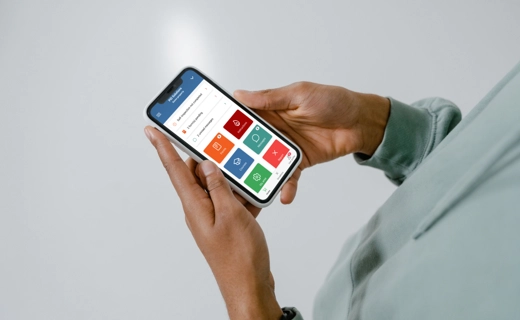
In PiD Drift, self-inspection is carried out as a digital form with various questions and answer options. If the answers reveal deviations or deficiencies, the system automatically creates deviations that operations and property management follow up on.
🎯 The purpose of self-inspections
Self-control should help tenants follow fire safety routines in their daily lives, to gain a better understanding of their duties, and to detect errors or deficiencies as quickly as possible.
🤝 Coordination of joint activities
In buildings with multiple tenants, there is a requirement for “Coordinated follow-up of joint internal control activities”. This means that the owner or center management ensures that common routines are implemented, followed up and improved - instead of each tenant having to handle everything separately. Self-control makes it easier to follow up fire safety in the building in an orderly and common way.
In this way, everyone works according to the same routines and with a common responsibility for the safety of the building.
What exactly does the concept of coordination entail?
1. Common structure and system
Everyone uses:
- Same procedures for reporting dangerous conditions, incidents and deviations
- Same requirements for documentation
- Same types of forms
- Same program for documentation of common activities
- Common handling of deviations, errors and deficiencies
All tenants using PiD Drift make it possible to follow up in an efficient and simple way.
2. Coordinated follow-up
Center management:
- Collects self-checks from tenants
- Follows up on deficiencies and deviations
- Sees patterns (e.g. recurring errors)
- Not just “receive forms”, but actively use them and store them in PiD Drift.
3. Joint handling of reports of errors, deficiencies and deviations
Deviations that affect several:
- Handled collectively
- Tenant notification is directly linked to the owner’s follow-up
- Critical in shopping malls where the systems are shared - PiD Drift takes care of this and documents what is being done and that deadlines are met.
4. Coordinated information and training
- Joint solution for fire protection training
- Joint information on safety routines
- Joint information routines
- Equal understanding of responsibilities and roles
Using PiD Drift ensures that all tenants are informed of important safety instructions, and that joint mandatory safety training is documented.
5. Clear division of responsibilities

“Coordinated” does not mean shared responsibility, but continuous responsibility.
Coordinated follow-up means that internal control activities are planned, implemented and followed up jointly between the actors in the building, so that fire safety is maintained comprehensively – not piecemeal.
Why is coordination important in shopping malls and other commercial buildings?
In buildings with many tenants, one error can have consequences for several at the same time. Fire safety also depends on common technical solutions and routines, and in the event of an evacuation, everyone must be able to cooperate and act quickly across the stores and businesses in the building.
Without coordination:
🚫 Risk of deviations “falling through the cracks”
🚫 Different practices and quality
🚫 Poorer preparedness
Self-inspection is an important contribution to:
✅ Increase tenants’ understanding by making responsibilities, duties and requirements concrete, relevant and recurring in everyday life
✅ Identifying conditions that can cause a fire or prevent safe escape
✅ Ensuring that fire safety measures function as intended
✅ Ensuring that errors and deficiencies are reported as quickly as possible