Battery storage systems in buildings, what does BESS mean for fire safety and risk?
2026-08-17 Academic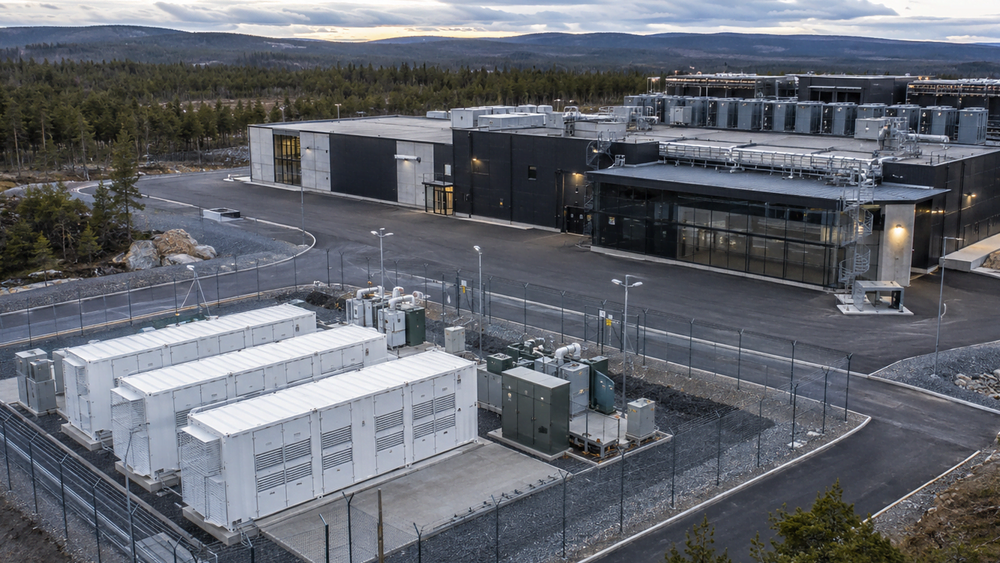
Illustration image created with AI
Several businesses are considering battery storage systems, BESS, to reduce power peaks, make better use of solar energy and ensure more stable operation. For buildings and real estate, this is not just about energy. When large battery systems are placed in or near buildings, the solution must be assessed against fire safety, regulations, internal control and emergency preparedness.
Briefly explained
Battery storage systems, BESS, store electrical energy in batteries for later use. In buildings, BESS can contribute to better energy management, lower power peaks and increased use of self-produced electricity. At the same time, the solution must be assessed against fire safety, location, ventilation, fire barriers, escape conditions, internal control and emergency preparedness.
As fire consultants, we at PiD Solutions AS see that battery storage is becoming increasingly relevant in both existing buildings and new buildings, which challenges both fire safety and operational solutions.
Why is BESS relevant in construction?
Battery storage systems can contribute to better energy management in buildings. By storing electricity from, for example, solar cell systems, businesses can use more of the self-produced energy when the demand is highest. BESS can also help to reduce power peaks, deal with capacity limitations and provide more flexible use of energy.
This can be particularly relevant for commercial buildings, warehouses, logistic hubs, industry facilities, and buildings with charging infrastructure. Again - these are solutions that must be assessed separately to ensure that fire safety is safeguarded and maintained by the property’s systematic risk management.
BESS is often assessed together with solar cell systems and local energy production. Therefore, the relationship with the power grid should also be clarified early on. NVE ↗ has its own rules and practices for solar power fitted on buildings and connection to the power grid.
If BESS is to be used as backup power or part of a solution for increased operational reliability, this must be designed separately. It requires the right management, connection solution and interaction with the building’s electrical system.
Common applications for battery energy storage
- Reduction of power peaks and more flexible energy use
- Handling capacity constraints in the event of limited power supply from the power grid
- Handling short load peaks, for example when starting up power-intensive equipment
- Integration with self-produced energy, for example solar panels, for storage and later use
- Interaction with backup power solutions, if the system is designed for this
- Charging infrastructure for electric vehicles and electrified machinery
- Industry and production with the goal of lower emissions and more robust operation
Who can benefit from battery storage systems?
Battery storage systems can be relevant for many types of users, but the need, benefit and risk profile vary significantly. For PiD Solutions AS, this is particularly relevant in buildings and businesses where energy, operational reliability and fire safety must be assessed together.
Typical users may be:
- owners and managers of commercial buildings
- industry and manufacturing companies
- warehouses, logistics and buildings with charging infrastructure
- businesses with solar panels or local energy production
- entities who handle, store or maintain larger batteries
- energy companies, grid companies and other players with a need for flexible energy storage
- larger residential projects, commercial properties and real estate players with shared energy solutions
What must businesses, owners and developers take into account before installing the solution?
When BESS is installed in or near a building, the solution must be seen in the context of the building’s use, fire concept, technical installations, escape conditions, operation and emergency preparedness.
It must be clarified early in the design process how the installation affects fire safety, operational solutions, and any prerequisites for the building’s use and permits. This applies to both new buildings and existing buildings.
Battery storage systems in existing buildings
Risk must be assessed for each individual installation. It is not a given that an existing “free” technical room can be used for this purpose. Typical conditions that must be assessed are related to both personal safety, structural safety, requirements for production and deliveries. It is also important that the project takes into account and cooperates with local fire emergency response forces to clarify opportunities and limitations.
Common to existing buildings is that BESS must be assessed against the building’s actual use and existing fire safety. It is not enough to look at the battery system in isolation. The solution must work with the building in which it is to be placed.
Battery storage systems in new buildings
In new buildings, battery storage systems should be considered early in the planning process. This allows the solution to be better integrated into the building’s energy design, technical infrastructure and fire concept. Early involvement provides better opportunities for correct placement, good fire separation, safe access, appropriate ventilation and a solution that is practical to operate over time.
NEK 488 ↗ is relevant to know of when planning grid-integrated energy storage systems. The standard points to safety requirements for the installation and operation of systems with batteries, inverters and control systems. This emphasizes the need to consider BESS as part of the building’s overall technical and safety solution.
Regulations, responsibilities and documentation
For new buildings and major changes to existing buildings, TEK17 ↗ will be central. Chapter 11 on fire safety is particularly relevant, because BESS can affect, among other things, placement, fire separations, technical installations, escape conditions and response capabilities.
In the use phase, the Fire and Explosion Protection Act ↗, Regulation on Fire Prevention ↗ and Internal Control Regulation ↗ are also relevant. For BESS, this means that technical measures, organizational routines and responsibilities must be documented.
The enterprise should have an overview of who follows up on the facility, how control and maintenance are carried out, how deviations are handled, and how information is shared with operating personnel, users and emergency services. In addition, relations with insurance, the municipality and the local fire department should be considered early where relevant.
What should be considered before installing BESS?
Before a battery storage system is established in or near a building, a specific risk assessment should be carried out. This should look at both the battery system, the building and how the solution will be operated over time.
Key factors that should be considered include:
- battery type and size of the system
- location, indoors, outdoors, technical room or container
- distance to flammable material and other technical installations
- fire barriers, ventilation and any gas handling
- detection, alarm transmission and notification
- extinguishing options and arrangements for cooling in the event of an incident
- escape conditions and impact on users of the building
- access, access and deployment options for the fire department
- control, maintenance and non-conformity management
- documentation, internal control and division of responsibilities
- need for dialogue with insurance, municipality or fire department
Here PiD Solutions AS can contribute. We assist with fire safety assessments, risk assessments, assessment against existing fire concept, development of measures to ensure systematic risk management and use of PiD Drift to document FDV - Everything to ensure that the building owner has documentation that shows compliance with regulations, activities and defined risk.
Fire hazard and thermal runaway (thermal chain reaction)
One of the most central risk factors in BESS is fire, especially related to thermal chain reaction in lithium-ion batteries.
Thermal chain reaction (thermal runaway) can occur if a battery cell is damaged, overheated or has an internal fault. The event can develop quickly and spread to nearby cells or modules. In such an event, hot, flammable gases and oxygen-containing compounds can be released, making the fire challenging to handle.
In closed spaces, gas emissions and build-up can also pose an explosion hazard if the conditions are right. Therefore, placement, ventilation, detection and facilitation of response are important factors when considering BESS in or around buildings.
Fires in lithium-ion batteries can be challenging to extinguish. Often, the response largely involves prolonged cooling to prevent further spread and reduce the risk of re-ignition. An incident can also have major economic consequences, not only through damage to buildings and equipment, but also through production downtime, lost deliveries, loss of reputation and reduced operational capacity.
Therefore, fire risk at BESS should not be treated as a single technical problem. It must be seen in the context of the building, its use, emergency preparedness and the enterprise’s ability to maintain safe operations.
DSB’s ↗ guide on fire in lithium-ion batteries is relevant as professional support, especially because it discusses risks, measures and practical assessments in the event of fire in such batteries. For businesses considering BESS, this emphasizes the need for good planning, documentation and preparedness.
BESS can be used, but the risk must be managed correctly
For PiD Solutions AS this is not about stopping development. Battery storage systems can provide major benefits for buildings, real estate and industry. They can contribute to better energy management, increased use of self-produced electricity, lower power peaks and more robust operation.
The point is that the solutions must be planned, documented and operated in a safe manner. When BESS is considered in buildings, the question should therefore not only be whether the solution provides energy and cost savings. The question should also be whether the solution is safe, robust and adapted to the building it is to be installed in.

As fire consultants, we see the value of connecting new technology with practical fire expertise. It requires curiosity to understand new solutions, competence to assess risk, quality of documentation and trust between the client, consultants, suppliers and users.
PiD Solutions AS also works with fire safety issues related to the handling, storage and maintenance of electric vehicle batteries. The experience is relevant to BESS, because both areas require risk assessment, clear routines, good documentation and practical understanding of batteries.
Through our internal control tool PiD Drift we can also contribute to a better overview of tasks, deviations, control and documentation in the operation phase.
Are you planning battery storage in or near a building? Contact us for a fire safety assessment of the solution, placement, documentation, internal control and operational management of fire safety.
FAQ
What is BESS?
BESS stands for Battery Energy Storage System and means battery storage system. The system stores electrical energy in batteries for later use.
Is BESS flammable?
BESS can pose a fire risk, especially in the event of a thermal chain reaction in lithium-ion batteries. The risk depends on, among other things, the battery type, size, location, ventilation, the building’s use and emergency preparedness.
Which regulations are relevant for BESS in buildings?
The planning and building act with TEK17 are relevant for new buildings and major changes to existing buildings. The electrical supervision act with Regulations concerning electrical low voltage installations apply for design and installation of BESS. In the use phase, the Fire and Explosion Protection Act, the Fire Prevention and Internal Control Regulations are relevant. The Internal Control Regulations state that internal control must be adapted to the nature, activities, risk factors and size of the business.
What should be considered before installing BESS?
Location, fire separation, ventilation, detection, evacuation conditions, response options, operation, maintenance, internal control, insurance and any dialogue with the municipality or fire department should be considered.
Can BESS be used as backup power?
Yes, but only if the system is designed to be able to supply the building in the event of a power outage. This requires the right controls, connection solution and interaction with the building’s electrical system.
Does BESS have to be followed up in the operational phase?
Yes. Battery storage systems should be monitored through clear routines for control, maintenance, deviation management, documentation and division of responsibilities. This should be included in the company’s internal control and FDV documentation.